Selected case study
SolAR
An evolving solarpunk mobile RPG set in a playable Singapore and built on a platform that turns real places into game layers.
Hands-on technical leadership across the Unity client, backend services and operational tooling.
At a glance
- Product
- SolAR Hub · Solarpunk mobile RPG
- Role
- Tech Lead at KYKUYO
- Scope
- Unity, backend and operations
- Platforms
- iOS and Android
- Focus
- Mobile, geospatial and applied AI
Product context
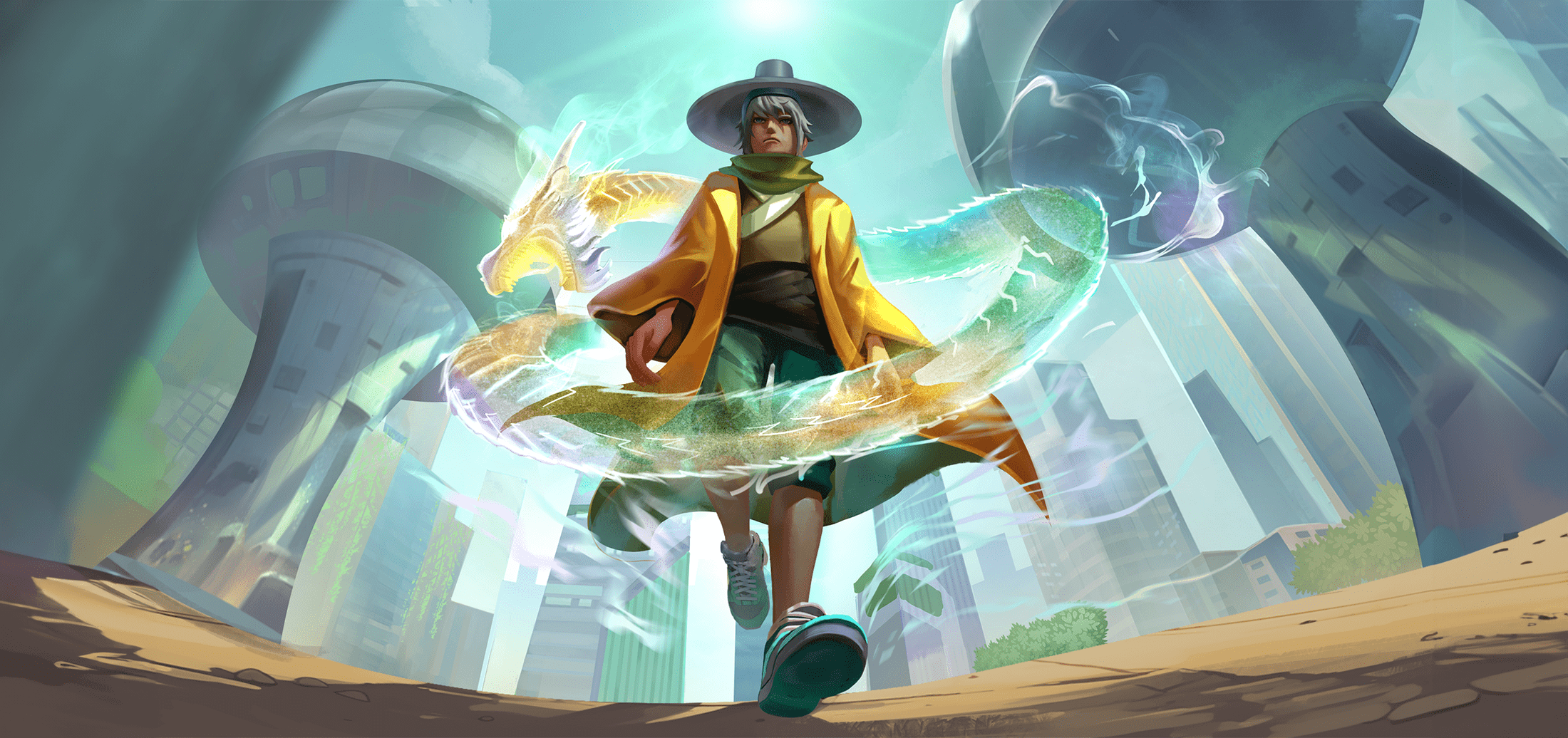
SolAR is a solarpunk mobile RPG developed by KYKUYO and available on iOS and Android. Its current public experience focuses on the SolAR Hub, a playable version of Singapore where players create an avatar, explore the environment, interact with its inhabitants and fight to purify the world.
A city as a game layer
KYKUYO presents World Engine as its proprietary platform for digitalising real districts, connecting game systems to specific places and overlaying an interactive layer on the city. Singapore is its first live city, with more than 7,700 real places publicly presented as mapped portals.
That context defines the technical environment I work in: the Unity client, world data, backend services and operational tooling need to evolve as one system, even though each layer retains distinct responsibilities.
The challenge
Features rarely belong to a single layer. A gameplay decision can affect device performance, location logic, service contracts and the way the team operates the product. The technical challenge is therefore not only to build individual systems, but to keep those systems coherent while a live mobile product continues to evolve.
My role
As Tech Lead, I lead technical work across the Unity client, backend services and operational tooling while remaining directly involved in architecture and implementation. My scope includes mobile performance, geospatial engineering, cross-system integrations and applied on-device AI.
That role combines direction with delivery: defining boundaries, unblocking decisions and implementing the parts where architectural context matters most. It also means giving the wider team a technical foundation they can extend safely.
I also represented KYKUYO at Build with Mapbox, presenting SolAR and how it connects real-world exploration with interactive storytelling.
Build with Mapbox presentation
A cross-stack case: combat
One concrete example is a data-driven turn-based combat system spanning targeting, reusable skills, combos, enemy behaviour, encounters, progression and backend support.
The important decision was to treat combat as a product capability rather than a self-contained Unity feature. Gameplay rules, progression data and service responsibilities needed explicit boundaries so that new content could be introduced without coupling every change to one implementation path.
Engineering decisions
Across the product, I favour data-driven systems, observable integration points and clear ownership between client and services. On mobile and geospatial work, the right solution is shaped by device constraints and the uncertainty of real-world inputs. Applied AI is handled in the same way: as a capability that must earn its place inside a reliable user experience.
Current state
SolAR is publicly available on iOS and Android and continues to evolve. The current build focuses on the SolAR Hub, its characters and combat, while the geospatial layer remains part of the broader World Engine platform and product direction published by KYKUYO. This case study represents my public technical scope within the team’s collective effort.
01 — Key contributions
Key contributions
- 01
Technical direction across the product
I connect architectural decisions with hands-on implementation across the Unity client, backend services and operational tooling, so changes are evaluated as product-wide decisions.
- 02
A city as a game layer
I work across a mobile world rendered in Unity, real-place data, backend services and operational tools. My contribution is to keep those layers coherent, observable and sustainable as the product evolves.
- 03
Cross-stack combat and progression
I led a data-driven turn-based combat system spanning targeting, reusable skills, combos, enemy behaviour, encounters, progression and the backend support around them.
- 04
Applied AI under product constraints
My scope includes on-device AI exploration and integration, approached as one capability within a live product rather than as an isolated model demonstration.
02 — Visual direction
Visual direction

Stack and tools
Stack and tools

Unity
Mobile client and interactive systems

C#
Gameplay, tools and runtime architecture

TypeScript
Backend services and shared contracts

NestJS
Modular API and product services

MongoDB
Persistent world and product data

AWS
Object storage and queue-based workflows

Firebase
Authentication and product analytics

Sentry
Client diagnostics and failure reporting